Quick answer
What size is an Australian citizenship photo?
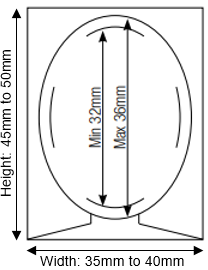
A Home Affairs citizenship photo is 35–40 mm wide by 45–50 mm high, with 32–36 mm from chin to crown, in colour on a neutral or light grey background and no more than 6 months old. Online uploads are unedited JPEGs of 70 KB to 3.5 MB, ideally 1200 × 1600 pixels.
An Australian citizenship photo is 35–40 mm wide by 45–50 mm high, with 32–36 mm from chin to crown, in colour against a neutral or light grey background, and no more than 6 months old. It must be completely unedited. Whether someone has to endorse it depends on the type of citizenship you are applying for.
Citizenship photo size and requirements
| Printed size | 35–40 mm wide × 45–50 mm high |
|---|---|
| Head size | 32–36 mm from chin to crown |
| Digital upload | JPEG, 70 KB to 3.5 MB; 1200 × 1600 pixels preferred; not a scan of a print |
| Background | Neutral or light grey, contrasting with your face |
| Colour | Colour photo, full face |
| Photo age | No more than 6 months old |
| Expression | Neutral, eyes open, mouth closed |
| Editing | None: do not remove the background, moles, wrinkles, scars or red eye |

Glasses and head coverings
Do
- Remove your glasses unless you have a medical reason
- If you must keep glasses on: untinted lenses, no frames over your eyes, no reflection
- Religious head coverings that show your whole face from chin to forehead, in a plain material
Don't
- Keep glasses on just because you need them to see
- Tinted lenses or glare
- Patterned head coverings or anything hiding the edges of your face


Endorsing your photo (Form 1195)
Citizenship by conferral applicants do not need to provide Form 1195 or have their photo endorsed. For citizenship by descent and evidence of Australian citizenship, every applicant, including children, needs Form 1195 and an endorsed photo.
The person who signs Form 1195 writes on the back of the photo:
"This is a true photograph of [applicant's full name]"
and signs it with the same signature they use on the form.

The person who signs must:
- be an Australian citizen who has known you for at least one year,
- work in one of the occupations listed on the form,
- not be related to you by birth, marriage or a de facto relationship, and
- be contactable by phone during working hours.
If you live overseas and do not know an Australian citizen who qualifies, a citizen of your country of residence in a listed occupation can sign instead.
Check the current form
Recent versions of Form 1195 may also ask the signer to sign across a bottom corner of the front of the photo without touching your face. Follow the instructions on the version of the form you download.
Submitting the photo
- Paper forms ask for one passport-sized photo with your full name on the back. Put it in a plastic sleeve and do not staple it to the form.
- Children under 16 can be included on a responsible parent's application, with a photo of each child.
- Home Affairs recommends a professional photo provider, such as an Australia Post outlet.
How to prepare your citizenship photo
- Take an unedited colour photo. Full face, with a neutral expression, eyes open and mouth closed, against a neutral or light grey background. Do not remove the background, moles, wrinkles, scars or red eye.
- Check the size. 35–40 mm wide × 45–50 mm high, with 32–36 mm from chin to crown, and no more than 6 months old.
- Get it endorsed if you need to. Citizenship by descent and evidence of citizenship applications need Form 1195 and an endorsed photo. Conferral applicants do not.
- Upload or attach it. Online, upload a JPEG of 70 KB to 3.5 MB, not a scan of a print. On paper, write your full name on the back, put it in a plastic sleeve and do not staple it. If the file is not a JPG, such as a HEIC photo from an iPhone, convert it with the free 123PhotoTool JPEG converter.
Citizenship photo FAQ
35–40 mm wide by 45–50 mm high, with 32–36 mm from your chin to the top of your head. For online applications, upload a JPEG between 70 KB and 3.5 MB, ideally 1200 × 1600 pixels.
Not for citizenship by conferral: Home Affairs says conferral applicants do not have to provide Form 1195 or have their photograph endorsed. Applications for citizenship by descent and evidence of citizenship need an endorsed photo and Form 1195 for every applicant, including children.
A neutral or light grey background that contrasts with your face. Do not remove or replace the background digitally.
Remove them unless you have a medical reason. If you keep them on, the lenses must be untinted, the frames must not cover your eyes and there must be no reflection. Poor eyesight alone is not accepted as a reason.
Official sources
- Home Affairs: Photo requirements for citizenship applications
- Home Affairs: Citizenship photo guidelines (PDF)
- Home Affairs: Form 1195 Identity declaration (PDF)
- Home Affairs: Identity declaration help text
- Home Affairs: Endorsed photograph help text
Last checked . Requirements and fees can change, so always confirm with the issuing agency before you apply. This site is independent and not affiliated with any government agency.